




XVI SIMPOSIO: Peru Will Only Be Able to Take Advantage of the US$64 Billion Portfolio of Mining Projects If Urgent Reforms Are Implemented
- During the roundtable discussion titled “Public Policy Proposals for the Mining Sector 2026–2031,” representatives from the private sector and international organizations agreed that Peru needs to remove obstacles to mining projects, streamline regulations, and strengthen institutions to capitalize on the current global demand for critical minerals.
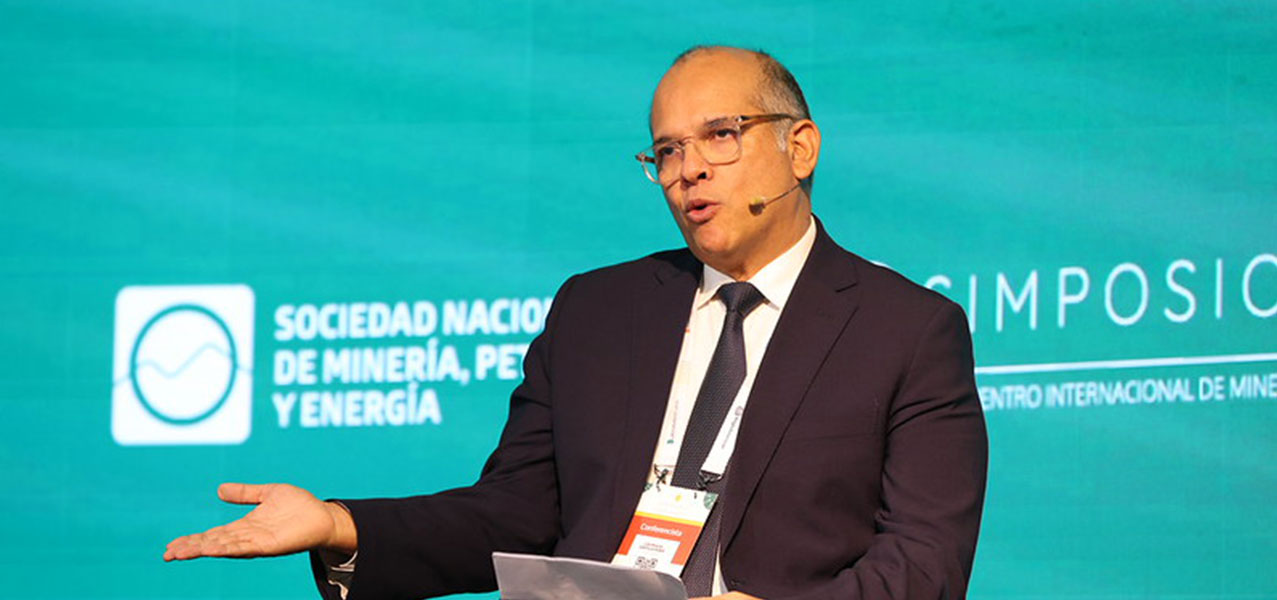
Lima, May 26, 2026. Peru faces a historic opportunity to establish itself as a strategic supplier of critical minerals, but to translate this into growth and well-being, it must streamline its portfolio of mining projects, reduce bureaucratic red tape, and strengthen the state’s capacity, experts and business leaders agreed during the roundtable discussion “Public Policy Proposals for the Mining Sector 2026–2031,” held at the SIMPOSIO – XVI International Mining Meeting, organized by the National Society of Mining, Petroleum, and Energy (SNMPE).
The panel was moderated by Luis Miguel Castilla, executive director of Videnza Institute, and featured the participation of Antonio Cusato, country economist for Peru at the World Bank; David Tuesta, president of the Private Competitiveness Council; Felipe James, president of the Sociedad Nacional de Industrias (SNI, National Society of Industries); and Julia Torreblanca, president of the SNMPE.
During the session, Castilla noted that Peru’s mining project portfolio currently exceeds US$64 billion, but nearly 50 projects remain stalled, with only one-third of that portfolio being utilized. The former Minister of Economy and Finance also noted that the country currently has the highest terms of trade since 1951, driven not only by China’s growth but also by the rising demand for minerals associated with artificial intelligence and the energy transition.
David Tuesta argued that Peru can only return to growth rates above 6% by prioritizing major mining projects currently on hold. He pointed out that high business costs, regulatory hurdles, and low labor productivity continue to impact the country’s competitiveness.
“The big problem is that no one is held accountable for ensuring the reforms work,” Tuesta stated, warning that a mining project can encounter over 200 administrative procedures and involve more than 30 public entities.
Julia Torreblanca noted that the main obstacle to implementing the mining project portfolio is excessive “red tape.” She proposed establishing a truly interoperable one-stop shop among agencies such as the Ministry of Energy and Mines, the Ministry of Culture, and the National Water Authority, among others.
“We all know that the US$64 billion in projects in the pipeline will not materialize if we do not address the root cause of the problem: the bureaucratic red tape and the enormous number of permits required to develop formal mining operations,” she stated.
Antonio Cusato warned of the deterioration in the government’s ability to execute public investment, revealing that as of 2023, nearly 64,000 public projects were abandoned or unfinished, which is equivalent to 45% of the entire active public investment portfolio.
“We would need to stop creating new public projects for three years to complete those already underway,” explained the World Bank economist, attributing part of the problem to the excessive flexibility of the public investment system and the shifting priorities of projects after each fiscal year.
For Felipe James, mining and agribusiness will remain key drivers of Peru’s economic growth; however, he noted that these sectors alone will not suffice to close the country’s social and territorial gaps. He proposed fostering new growth engines linked to industry, tourism, and production chains.
“Mining can become the major engine that drives other industrial sectors,” said the president of the SNI. He also proposed strengthening logistics infrastructure and evaluating sectoral policies similar to those that drove agro-export growth in recent decades.
Toward the end of the panel discussion, Castilla invited participants to share what they believed should be the most urgent change the next administration should implement within its first 100 days to ensure that mining contributes to more inclusive growth.
In this context, Julia Torreblanca, president of the SNMPE, emphasized the “prioritization of projects and efficient, transparent management of available resources.” For James, from the SIN, it is “removing obstacles and reducing bureaucracy.” Tuesta supported Torreblanca’s statement, stressing the urgency to “prioritize the execution of projects,” and Cusato highlighted that “the presence of the State in mining areas is fundamental, and the quality of public services must improve for the benefit of the population.”
The panel was part of the SIMPOSIO – XVI International Mining Meeting, held May 26–28 at the JW Marriott Hotel Lima under the theme “Mining that unites, builds the present, and transforms the future.”
Photos from the event are available at the following link: https://flickr.com/photos/195630249@N08

