


XVI SIMPOSIO: Mining Leaders Propose Synergies and Shared Infrastructure to Accelerate Investments in Peru
- At the panel “Peruvian Mining: Strategies to Boost Production and Investment,” executives from Southern Peru, Minsur, Buenaventura, and Glencore agreed on the need for state leadership, predictability, legal stability, and public-private collaboration to develop new projects.
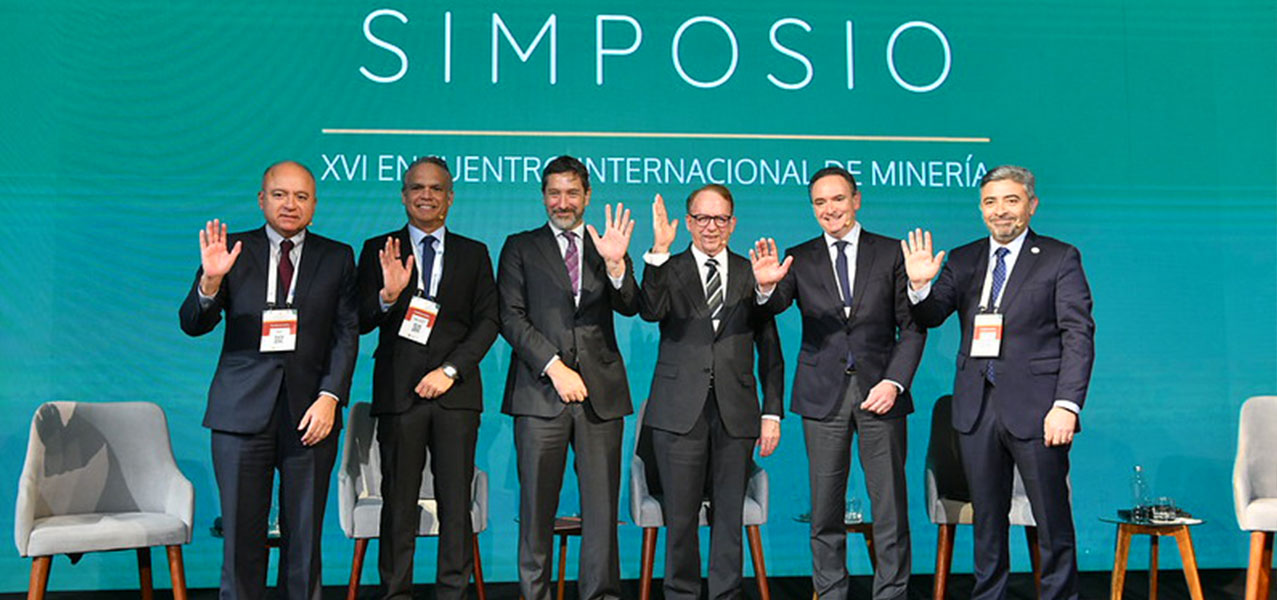
Lima, May 27, 2026. Peruvian mining has a significant opportunity to enhance its production, attract new investments, and establish development hubs in strategic regions such as the southern mining corridor and Cajamarca, contingent upon strong government leadership and a predictable and stable regulatory environment. This consensus emerged among industry leaders during the SIMPOSIO – XVI International Mining Meeting, organized by the National Society of Mining, Petroleum, and Energy (SNMPE). These insights were shared during the panel discussion titled “Peruvian Mining: Strategies to Boost Production and Investments,” which was moderated by Víctor Gobitz, CEO and President of Quilla Resources. The panel also featured Juan Luis Kruger, General Manager of Minsur; Leandro García, General Manager of Compañía de Minas Buenaventura; Raúl Jacob, Vice President of Finance and Chief Financial Officer of Southern Peru Copper Corporation; and Pablo Carvalho, Funding Manager of Glencore Chile.
At the outset of the debate, Gobitz underscored the necessity for a more predictable and responsive government, as well as the ability to identify synergies, shared services, and common infrastructure to expedite project development.
In this context, the panelists concurred that a southern mining corridor presents a significant opportunity. Jacob highlighted the alternative of a train linking Apurímac to the coast to facilitate mineral transport. “For this, the country requires leadership, which must originate from the government,” he stated, noting that the disparate timelines of projects necessitate an entity to coordinate viable and financially sustainable solutions.
Cajamarca was also identified as a priority area for developing synergies. Kruger discussed the potential for integrating projects such as Michiquillay, Galeno, and Conga through shared infrastructure, while García proposed evaluating solutions like a shared tailings dam or a single concentrator plant, ensuring compliance with appropriate technical, environmental, and social standards.
“The path to diversifying risk involves forming strategic partnerships,” stated Kruger. He emphasized that alliances and joint ventures are becoming increasingly relevant in an industry that necessitates significant investments.
The executives concurred that the State’s ability to implement projects is essential for transforming the resources generated by mining into infrastructure, public services, and regional development. They underscored the importance of predictability, legal stability, combating illegal mining, and a robust State presence in rural areas as critical conditions for sustaining new investments.
Additionally, the panelists outlined their companies’ major advancements and projects. Raúl Jacob of Southern Peru Copper Corporation highlighted the Tía María project, which is currently 35% complete and represents the only greenfield copper project under construction globally. He noted that the project employs over 4,500 individuals and is expected to commence production in the latter half of next year.
Juan Luis Kruger highlighted Minsur’s position as an integrated tin producer, noting that the San Rafael mine in Puno has established itself as one of the leading tin mines globally. He highlighted that the Pisco smelter and refinery enable the company to provide the market with tin that boasts 100% traceability, from exploration to end-user delivery. Additionally, he emphasized the ongoing development of the Mina Justa Underground mine and the company’s new investments in exploration, innovation, and sustainability.
Leandro García, in turn, highlighted the company’s presence across eight regions in the country and its 30-year history on the New York Stock Exchange. He also pointed out the recent approval of the modification of the detailed environmental impact study (MEIA-d) for the Coroccohuayco project, which will require an investment of approximately US$1.8 billion and is expected to extend the future of mining in Espinar for over 25 years. He asserted that mining growth must be linked not only to increased production but also to territorial development and operational legitimacy.
Photos are available at the following link: https://flickr.com/photos/195630249@N08

