


McKinsey: “The Future of Talent in Mining Will Be a Collaboration Between People, Artificial Intelligence, and Autonomous Systems”
- Thibaut Larrat, a partner at McKinsey & Company, commented that the talent shortage has become one of the main risks to global mining competitiveness. He noted that artificial intelligence and automation will be key to closing the skills gap and sustaining industry growth.
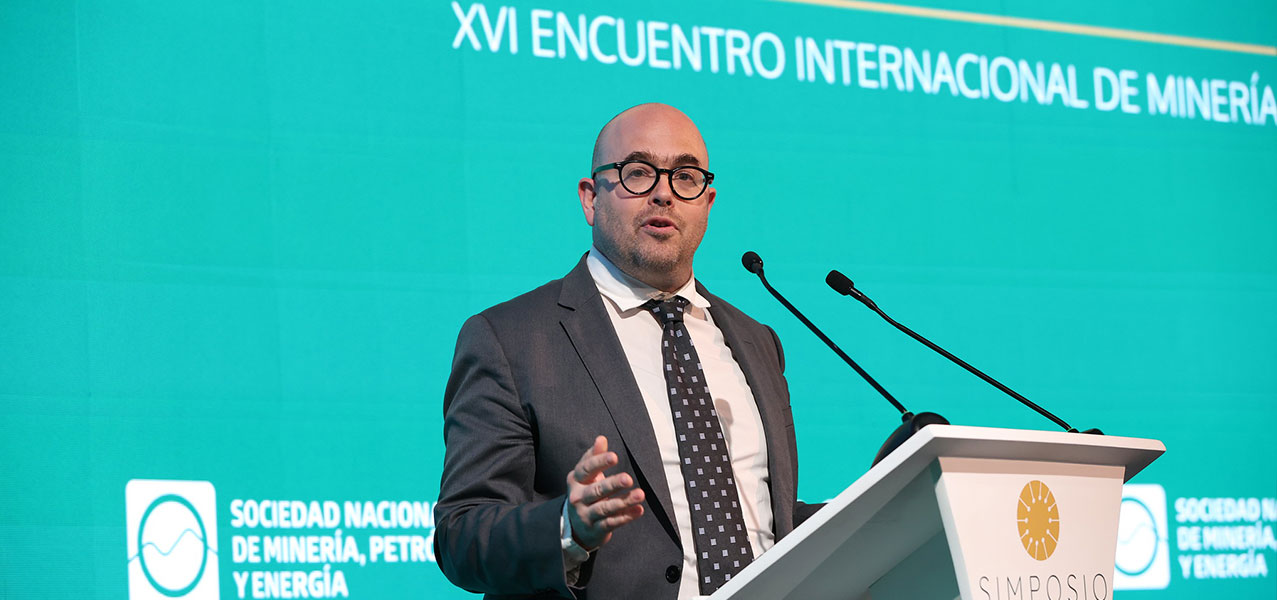
Lima, May 27, 2026 – The growing talent shortage in mining and the accelerated advance of artificial intelligence will mark a profound transformation in the global industry during the next few years, said Thibaut Larrat, partner at McKinsey & Company, during his participation in the SIMPOSIO – XVI International Mining Meeting, organized by the National Society of Mining, Petroleum and Energy (SNMPE).
During his presentation “Talent in mining: trends, threats and opportunities”, Larrat argued that the sector faces increasing pressure to attract and retain workers in a context of expanding demand for critical minerals and the energy transition.
“Talent is becoming one of the most important factors for the mining industry. Ten years ago, we were not talking about this; today it is one of the main topics on the agenda of industry leaders,” he noted.
The executive explained that the industry is facing two significant challenges: an increased demand for workers and a shrinking talent pool. In the United States, for example, he estimated that nearly half of the mining workforce will leave the industry in the next decade due to its aging demographics.
This issue is further compounded by a decline in young people’s interest in mining-related careers. He noted that enrollment in mining engineering programs has fallen by 35% in the United States and is also experiencing significant declines in countries like Canada and Australia.
Larrat remarked that mining now competes not only with other extractive industries but with all economic sectors for the same talent. This is especially true among younger generations, who prioritize factors such as work flexibility, corporate purpose, and opportunities for professional development.
In that context, he argued that leading mining companies are driving four major changes: skills-based workforce strategic planning, redesigning the employee value proposition, strengthening capabilities, and greater automation.
Among the most visible trends, he mentioned the growth of remote operations centers, which allow functions to be moved outside of mining operations and expand access to new professional profiles, especially digital and female talent.
Regarding the technological impact, Larrat stated that 59% of the hours currently worked in mining could be automated, using already available technologies, including cognitive and physical tasks.
Furthermore, he noted that the demand for skills related to artificial intelligence in the United States has increased sixteen-fold in just eighteen months, highlighting the rapid technological changes impacting the industry.
“Agentive artificial intelligence—capable of performing tasks autonomously—will completely transform our organizations,” he stated. However, he emphasized that the future will not be a replacement of humans by machines, but rather a collaboration between people, artificial intelligence, and autonomous systems.
The executive explained that several mining companies are investing in automation and AI, not necessarily to reduce staff, but to grow and reallocate time towards higher-value tasks.
Finally, Larrat considered that the mining sector has a significant opportunity to expand its workforce through greater inclusion and diversity, in an industry that remains predominantly male in several countries, including Peru.
“We must treat talent with the same rigor as we treat capital: measure it, invest in it, monitor it, and manage it as a strategic asset,” he concluded.
Photos are available at the following link: https://flickr.com/photos/195630249@N08

