


XVI SIMPOSIO: A National Policy Is Needed to Promote the Exploration of Critical Minerals in the Country
- Peru needs to define which minerals are strategic for the country, improve the available information, and strengthen the institutional framework to take advantage of its potential in this field.
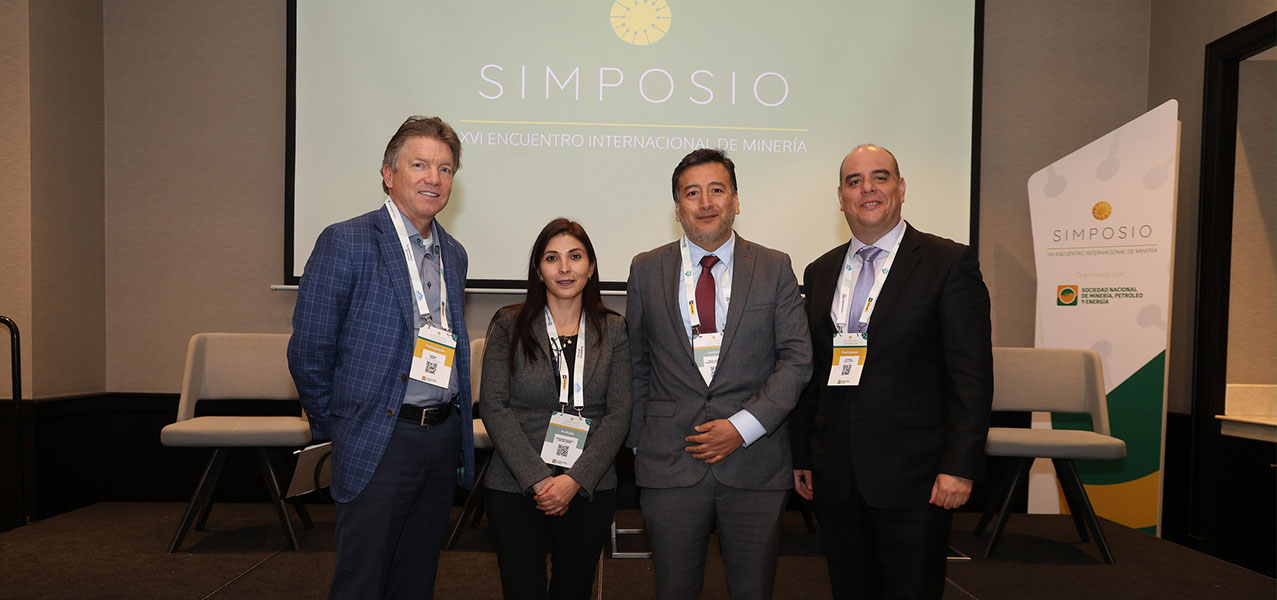
Lima, May 27, 2026 – Amidst increasing global competition for access to critical minerals, Peru is presented with a significant opportunity due to its geological potential and established status as a producing country. However, during the SIMPOSIO–XVI International Mining Meeting, experts concurred that this potential has not yet been effectively translated into a national strategy characterized by clear priorities, enhanced information, and strengthened institutional capacity.
A key focus of the discussions was the absence of a defined national vision regarding critical minerals. In this context, Rasul Camborda, a lawyer with ALALAW, posed a fundamental question for the debate: “Critical minerals according to whom and for whom?” He cautioned that, unlike other economies that have already established diagnoses, objectives, and action frameworks in this domain, Peru currently lacks a specific regulatory framework for critical minerals. “The first task is to develop a national mining policy and, as part of this effort, to define our own list of critical minerals,” he remarked.
In a similar vein, Ricardo Labó, senior mining specialist at the World Bank Group, emphasized that “Peru needs its own list of critical minerals, tailored to its realities as a producing and exporting nation.” He further noted that the World Bank has been assisting the Ministry of Energy and Mines in creating a methodology and roadmap to facilitate this definition.
Labó emphasized that a significant gap in assessing the country’s potential is the insufficient information available. “The first thing we found is that there is not enough information,” he stated, underscoring the necessity to enhance information systems and improve reporting on concentrates, byproducts, and tailings.
From the academic sector, Madeleine Guillen, a Research Professor at the National University of San Agustín of Arequipa (UNSA), presented the advancements of a project focused on the presence and viability of rare earth elements (REEs) in southern Peru, developed in collaboration with the Colorado School of Mines. As part of this initiative, it was revealed that, following the analysis of tailings samples, a national database comprising 31,183 REE concentration values has been established utilizing artificial intelligence, machine learning, and georeferenced records from scientific and institutional sources.
“From academia, we are committed to ensuring that existing knowledge does not remain confined to libraries or repositories without practical application,” Guillen stated. He further explained that the research aims to generate valuable evidence to enhance exploration and expand understanding of critical minerals in the country. The recently published results, accessible for future research, reinforce the importance of collaboration among academia, technology, and the mining sector in identifying new opportunities within this field.
Peru’s challenge extends beyond merely responding to global demand associated with the energy transition; it also involves defining its desired role within the critical minerals value chain. To achieve this, it is essential to develop a comprehensive strategy grounded in improved information, technical capabilities, and clear development objectives.
Photos are available at the following link: https://flickr.com/photos/195630249@N08

